Sen. Levin recommends Holder appoint a ‘distinguished individual or individuals’ to ‘establish accountability of high-level officials’
 A report by the Senate Armed Services Committee released Tuesday night says that some harsh interrogation techniques used at Abu Ghraib prison weren’t approved by officials in the George W. Bush administration until after they were already being put into use.
“Intelligence and military officials under the Bush administration began preparing to conduct harsh interrogations long before they were granted legal approval to use such methods — and weeks before the CIA captured its first high-ranking terrorism suspect, Senate investigators have concluded,” the Washington Post reported Wednesday.
The paper adds, “Sen. Carl M. Levin (D-Mich.), chairman of the committee, said the new findings show a direct link between the early policy decisions and the highly publicized abuses of detainees at prisons such as Abu Ghraib in Iraq.”
“Senior officials sought out information on, were aware of training in, and authorized the use of abusive interrogation techniques,” Levin said. “Those senior officials bear significant responsibility for creating the legal and operational framework for the abuses.”
President George W. Bush made a written determination that Common Article 3 of the Geneva Conventions, which would have afforded minimum standards for humane treatment, did not apply to al Qaeda or Taliban detainees. This act, the committee found, cleared the way for a new interrogation program to be developed in-part based on “Chinese communist” tactics used against Americans during the Korean War, mainly to elicit false confessions for propaganda purposes.
The committee’s report was made available in Dec. 2008, but was delayed by the Pentagon’s declassification program. Sen. Carl Levin (D-MI) concluded that the findings were enough to warrant serious consideration by the Department of Justice.
“There is still the question, however, of whether high level officials who approved and authorized those policies should be held accountable,” he wrote. “I have recommended to Attorney General Holder that he select a distinguished individual or individuals – either inside or outside the Justice Department, such as retired federal judges – to look at the volumes of evidence relating to treatment of detainees, including evidence in the Senate Armed Services Committee’s report, and to recommend what steps, if any, should be taken to establish accountability of high-level officials – including lawyers.”
The tactics, such as waterboarding, body slapping, the use of dogs and insects, prolonged standing, sleep deprivation and forced sexual humiliation are all part of the Navy’s Survival Evasion Resistance and Escape (SERE) program.
“In SERE training, U.S. troops are briefly exposed, in a highly controlled setting, to abusive interrogation techniques used by enemies that refuse to follow the Geneva Conventions,” the report reads. “The techniques are based on tactics used by Chinese Communists against American soldiers during the Korean War for the purpose of eliciting false confessions for propaganda purposes. Techniques used in SERE training include stripping trainees of their clothing, placing them in stress positions, putting hoods over their heads, subjecting them to face and body slaps, depriving them of sleep, throwing them up against a wall, confining them in a small box, treating them like animals, subjecting them to loud music and flashing lights, and exposing them to extreme temperatures. Until recently, the Navy SERE school also used waterboarding.
‘The purpose of the SERE program is to provide U.S. troops who might be captured a taste of the treatment they might face so that they might have a better chance of surviving captivity and resisting abusive and coercive interrogations.”
SERE is operated by the “Joint Personnel Recovery Agency (JPRA),” the report says. “…An agency whose expertise was in training American personnel to withstand interrogation techniques considered illegal under the Geneva Conventions.”
“The Committee’s investigation revealed that, following Secretary Rumsfeld’s authorization, senior staff at GTMO drafted a standard operating procedure (SOP) for the use of SERE techniques, including stress positions, forcibly stripping detainees, slapping, and ‘walling’ them,” the committee found. “That SOP stated that ‘The premise behind this is that the interrogation tactics used at U.S. military SERE schools are appropriate for use in real-world interrogations.’ Weeks later, in January 2003, trainers from the Navy SERE school traveled to GTMO and provided training to interrogators on the use of SERE techniques on detainees.”
“According to several former top officials involved in the discussions seven years ago, they did not know that the military training program, called SERE [...] had been created decades earlier to give American pilots and soldiers a sample of the torture methods used by Communists in the Korean War, methods that had wrung false confessions from Americans,” reported the New York Times.
“Even George J. Tenet, the C.I.A. director who insisted that the agency had thoroughly researched its proposal and pressed it on other officials, did not examine the history of the most shocking method, the near-drowning technique known as waterboarding.”
“In mid-August 2003, an email from staff at Combined Joint Task Force 7 (CJTF-7) headquarters in Iraq requested that subordinate units provide input for a ‘wish list’ of interrogation techniques [to be used at Abu Ghraib], stated that ‘the gloves are coming off,’ and said ‘we want these detainees broken,’” the report found.
The full report may be read here (PDF link).
A lengthy response from Sen. Carl Levin (D-MI) follows.
####
Statement of Senator Carl Levin
Senate Armed Services Committee
Report of the Inquiry into the Treatment of Detainees in U.S. Custody
Today we’re releasing the declassified report of the Senate Armed Services Committee’s investigation into the treatment of detainees in U.S. custody. The report was approved by the Committee on November 20, 2008 and has, in the intervening period, been under review at the Department of Defense for declassification.
In my judgment, the report represents a condemnation of both the Bush administration’s interrogation policies and of senior administration officials who attempted to shift the blame for abuse – such as that seen at Abu Ghraib, Guantanamo Bay, and Afghanistan – to low ranking soldiers. Claims, such as that made by former Deputy Secretary of Defense Paul Wolfowitz that detainee abuses could be chalked up to the unauthorized acts of a “few bad apples,” were simply false.
The truth is that, early on, it was senior civilian leaders who set the tone. On September 16, 2001, Vice President Dick Cheney suggested that the United States turn to the “dark side” in our response to 9/11. Not long after that, after White House Counsel Alberto Gonzales called parts of the Geneva Conventions “quaint,” President Bush determined that provisions of the Geneva Conventions did not apply to certain detainees. Other senior officials followed the President and Vice President’s lead, authorizing policies that included harsh and abusive interrogation techniques.
The record established by the Committee’s investigation shows that senior officials sought out information on, were aware of training in, and authorized the use of abusive interrogation techniques. Those senior officials bear significant responsibility for creating the legal and operational framework for the abuses. As the Committee report concluded, authorizations of aggressive interrogation techniques by senior officials resulted in abuse and conveyed the message that physical pressures and degradation were appropriate treatment for detainees in U.S. military custody.
In a May 10, 2007, letter to his troops, General David Petraeus said that “what sets us apart from our enemies in this fight… is how we behave. In everything we do, we must observe the standards and values that dictate that we treat noncombatants and detainees with dignity and respect. While we are warriors, we are also all human beings.” With last week’s release of the Department of Justice Office of Legal Counsel (OLC) opinions, it is now widely known that Bush administration officials distorted Survival Evasion Resistance and Escape “SERE” training – a legitimate program used by the military to train our troops to resist abusive enemy interrogations – by authorizing abusive techniques from SERE for use in detainee interrogations. Those decisions conveyed the message that abusive treatment was appropriate for detainees in U.S. custody. They were also an affront to the values articulated by General Petraeus.
In SERE training, U.S. troops are briefly exposed, in a highly controlled setting, to abusive interrogation techniques used by enemies that refuse to follow the Geneva Conventions. The techniques are based on tactics used by Chinese Communists against American soldiers during the Korean War for the purpose of eliciting false confessions for propaganda purposes. Techniques used in SERE training include stripping trainees of their clothing, placing them in stress positions, putting hoods over their heads, subjecting them to face and body slaps, depriving them of sleep, throwing them up against a wall, confining them in a small box, treating them like animals, subjecting them to loud music and flashing lights, and exposing them to extreme temperatures. Until recently, the Navy SERE school also used waterboarding. The purpose of the SERE program is to provide U.S. troops who might be captured a taste of the treatment they might face so that they might have a better chance of surviving captivity and resisting abusive and coercive interrogations.
SERE training techniques were never intended to be used in the interrogation of detainees in U.S. custody. The Committee’s report, however, reveals troubling new details of how SERE techniques came to be used in interrogations of detainees in U.S. custody.
Influence of SERE on Military Interrogations at Guantanamo Bay
The Committee’s investigation uncovered new details about the influence of SERE techniques on military interrogations at Guantanamo Bay, Cuba (GTMO). According to newly released testimony from a military behavioral scientist who worked with interrogators at GTMO, “By early October [2002] there was increasing pressure to get ‘tougher’ with detainee interrogations” at GTMO. (p. 50). As a result, on October 2, 2002, two weeks after attending interrogation training led by SERE instructors from the Joint Personnel Recovery Agency (JPRA), the DoD agency that oversees SERE training, the behavioral scientist and a colleague drafted a memo proposing the use of aggressive interrogation techniques at GTMO. The behavioral scientist said he was told by GTMO’s intelligence chief that the interrogation memo needed to contain coercive techniques or it “wasn’t going to go very far.” (p. 50). Declassified excerpts from that memo indicate that it included stress positions, food deprivation, forced grooming, hooding, removal of clothing, exposure to cold weather or water, and scenarios designed to convince a detainee that “he might experience a painful or fatal outcome.” On October 11, 2002, Major General Michael Dunlavey, the Commander of JTF-170 at GTMO requested authority to use aggressive techniques. MG Dunlavey’s request was based on the memo produced by the behavioral scientists.
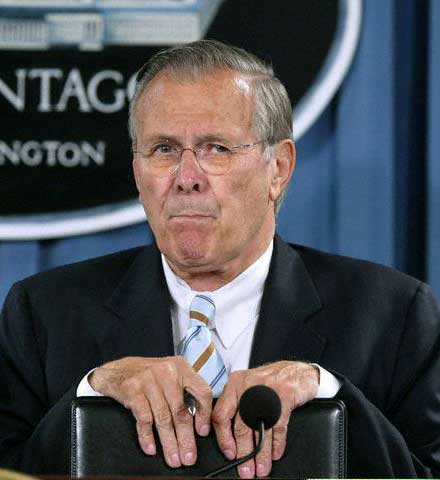
MG Dunlavey’s request eventually made its way to Department of Defense (DoD) General Counsel Jim Haynes’ desk. Notwithstanding serious legal concerns raised by the military service lawyers, Haynes recommended that Secretary of Defense Donald Rumsfeld approve 15 of the interrogation techniques requested by GTMO. On December 2, 2002, Secretary Rumsfeld approved Haynes’ recommendation, authorizing such techniques as stress positions, removal of clothing, use of phobias (such as fear of dogs), and deprivation of light and auditory stimuli.
The Committee’s investigation revealed that, following Secretary Rumsfeld’s authorization, senior staff at GTMO drafted a standard operating procedure (SOP) for the use of SERE techniques, including stress positions, forcibly stripping detainees, slapping, and “walling” them. That SOP stated that “The premise behind this is that the interrogation tactics used at U.S. military SERE schools are appropriate for use in real-world interrogations.” Weeks later, in January 2003, trainers from the Navy SERE school travelled to GTMO and provided training to interrogators on the use of SERE techniques on detainees. (pp. 98-104).
Impact of Secretary Rumsfeld’s Authorization on Interrogations in Iraq and Afghanistan
The influence of Secretary Rumsfeld’s December 2, 2002, authorization was not limited to interrogations at GTMO. Newly declassified excerpts from a January 11, 2003, legal review by a Special Mission Unit (SMU) Task Force lawyer in Afghanistan state that “SECDEF’s approval of these techniques provides us the most persuasive argument for use of ‘advanced techniques’ as we capture possible [high value targets] … the fact that SECDEF approved the use of the… techniques at GTMO, [which is] subject to the same laws, provides an analogy and basis for use of these techniques [in accordance with] international and U.S. law.” (p.154).
The Committee’s report also includes a summary of a July 15, 2004, interview with CENTCOM’s then-Deputy Staff Judge Advocate (SJA) about Secretary Rumsfeld’s authorization and its impact in Afghanistan. The Deputy SJA said: “the methodologies approved for GTMO… would appear to me to be legal interrogation processes. [The Secretary of Defense] had approved them. The General Counsel had approved them. .. I believe it is fair to say the procedures approved for Guantanamo were legal for Afghanistan.” (p. 156).
The Committee’s report provides extensive details about how the aggressive techniques made their way from Afghanistan to Iraq. In February 2003, an SMU Task Force designated for operations in Iraq obtained a copy of the SMU interrogation policy from Afghanistan that included aggressive techniques, changed the letterhead, and adopted the policy verbatim. (p. 158) Months later, the Interrogation Officer in Charge at Abu Ghraib obtained a copy of the SMU interrogation policy and submitted it, virtually unchanged, through her chain of command to Combined Joint Task Force 7 (CJTF-7), led at the time by Lieutenant General Ricardo Sanchez. On September 14, 2003, Lieutenant General Sanchez issued an interrogation policy for CJTF-7 that authorized interrogators to use stress positions, environmental manipulation, sleep management, and military working dogs to exploit detainees’ fears in their interrogations of detainees.
The Committee’s investigation uncovered documents indicating that, almost immediately after LTG Sanchez issued his September 14, 2003, policy, CENTCOM lawyers raised concerns about its legality. One newly declassified email from a CENTCOM lawyer to the Staff Judge Advocate at CJTF-7 – sent just three days after the policy was issued – warned that “Many of the techniques [in the CJTF-7 policy] appear to violate [Geneva Convention] III and IV and should not be used . . .” (p. 203). Even though the Bush administration acknowledged that the Geneva Conventions applied in Iraq, it was not until nearly a month later that CJTF-7 revised that policy.
Not only did SERE techniques make their way to Iraq, but SERE instructors did as well. In September 2003, JPRA sent a team to Iraq to provide assistance to interrogation operations at an SMU Task Force. The Chief of Human Intelligence and Counterintelligence at the Task Force testified to the Committee in February 2008 that JPRA personnel demonstrated SERE techniques to SMU personnel including so-called “walling” and striking a detainee as they do in SERE school. (p. 175). As we heard at our September 2008 hearing, JPRA personnel were present during abusive interrogations during that same trip, including one where a detainee was placed on his knees in a stress position and was repeatedly slapped by an interrogator. (p. 176). JPRA personnel even participated in an interrogation, taking physical control of a detainee, forcibly stripping him naked, and giving orders for him to be kept in a stress position for 12 hours. In August 3, 2007, testimony to the Committee, one of the JPRA team members said that, with respect to stripping the detainee, “we [had] done this 100 times, 1000 times with our [SERE school] students.” The Committee’s investigation revealed that forced nudity continued to be used in interrogations at the SMU Task Force for months after the JPRA visit. (pp. 181-182).
Over the course of the investigation, the Committee obtained the statements and interviews of scores of military personnel at Abu Ghraib. These statements reveal that the interrogation techniques authorized by Secretary Rumsfeld in December 2002 for use at GTMO – including stress positions, forced nudity, and military working dogs – were used by military intelligence personnel responsible for interrogations.
· The Interrogation Officer in Charge in Abu Ghraib in the fall of 2003 acknowledged that stress positions were used in interrogations at Abu Ghraib. (p. 212).
· An Army dog handler at Abu Ghraib told military investigators in February 2004 that “someone from [military intelligence] gave me a list of cells, for me to go see, and pretty much have my dog bark at them… Having the dogs bark at detainees was psychologically breaking them down for interrogation purposes.” (p. 209).
· An intelligence analyst at Abu Ghraib told military investigators in May 2004 that it was “common that the detainees on [military intelligence] hold in the hard site were initially kept naked and given clothing as an incentive to cooperate with us.” (p. 212).
· An interrogator told military investigators in May 2004 that it was “common to see detainees in cells without clothes or naked” and says it was “one of our approaches.” (p. 213).
The investigation also revealed that interrogation policies authorizing aggressive techniques were approved months after the CJTF-7 policy was revised to exclude the techniques, and even after the investigation into detainee abuses at Abu Ghraib had already begun. For example, an interrogation policy approved in February 2004 in Iraq included techniques such as use of military working dogs and stress positions. (p. 220).
A policy approved for CJTF-7 units in Iraq in March 2004 also included aggressive techniques. While much of the March 2004 policy remains classified, newly declassified excerpts indicate that it warned that interrogators “should consider the fact that some interrogation techniques are viewed as inhumane or otherwise inconsistent with international law before applying each technique. These techniques are labeled with a [CAUTION].” Among the techniques labeled as such were a technique involving power tools, stress positions, and the presence of military working dogs. (pp. 220-221).
Warnings about Using SERE Techniques in Interrogations
Some have asked why, if it is okay for our own U.S. personnel to be subjected to physical and psychological pressures in SERE school, what is wrong with using those SERE training techniques on detainees? The Committee’s investigation answered that question.
On October 2, 2002, Lieutenant Colonel Morgan Banks, the senior Army SERE psychologist warned against using SERE training techniques during interrogations in an email to personnel at GTMO, writing that:
[T]he use of physical pressures brings with it a large number of potential negative side effects… When individuals are gradually exposed to increasing levels of discomfort, it is more common for them to resist harder… If individuals are put under enough discomfort, i.e. pain, they will eventually do whatever it takes to stop the pain. This will increase the amount of information they tell the interrogator, but it does not mean the information is accurate. In fact, it usually decreases the reliability of the information because the person will say whatever he believes will stop the pain… Bottom line: the likelihood that the use of physical pressures will increase the delivery of accurate information from a detainee is very low. The likelihood that the use of physical pressures will increase the level of resistance in a detainee is very high… (p. 53).
Likewise, the Deputy Commander of DoD’s Criminal Investigative Task Force at GTMO told the Committee in 2006 that CITF “was troubled with the rationale that techniques used to harden resistance to interrogations would be the basis for the utilization of techniques to obtain information.” (p. 69).
Other newly declassified emails reveal additional warnings. In June 2004, after many SERE techniques had been authorized in interrogations and JPRA was considering sending its SERE trainers to interrogation facilities in Afghanistan, another SERE psychologist warned: “[W]e need to really stress the difference between what instructors do at SERE school (done to INCREASE RESISTANCE capability in students) versus what is taught at interrogator school (done to gather information). What is done by SERE instructors is by definition ineffective interrogator conduct… Simply stated, SERE school does not train you on how to interrogate, and things you ‘learn’ there by osmosis about interrogation are probably wrong if copied by interrogators.” (p. 229).
Conclusion
If we are to retain our status as a leader in the world, we must acknowledge and confront the abuse of detainees in our custody. The Committee’s report and investigation makes significant progress toward that goal. There is still the question, however, of whether high level officials who approved and authorized those policies should be held accountable. I have recommended to Attorney General Holder that he select a distinguished individual or individuals – either inside or outside the Justice Department, such as retired federal judges – to look at the volumes of evidence relating to treatment of detainees, including evidence in the Senate Armed Services Committee’s report, and to recommend what steps, if any, should be taken to establish accountability of high-level officials – including lawyers.




 Posts
Posts


